PLO Strategy: How to Play Pot-Limit Omaha Like a Pro
 Step into the DojoFree poker against bots that learn. Earn your belt. Dojo Coin is play money.JOIN NOW
Quick answer: Winning PLO strategy starts with hands whose four cards work together: connected, suited (ideally double-suited) and high. You must use exactly two hole cards and three board cards, so draw to the nuts, not to second-best hands. Play more hands in position, use pot-sized raises with a purpose, and expect bigger swings than Hold'em, because hand values run much closer together.
Need a refresher? The Pot-Limit Omaha rules cover the deal, the "use exactly two" rule, and how the pot limit works.
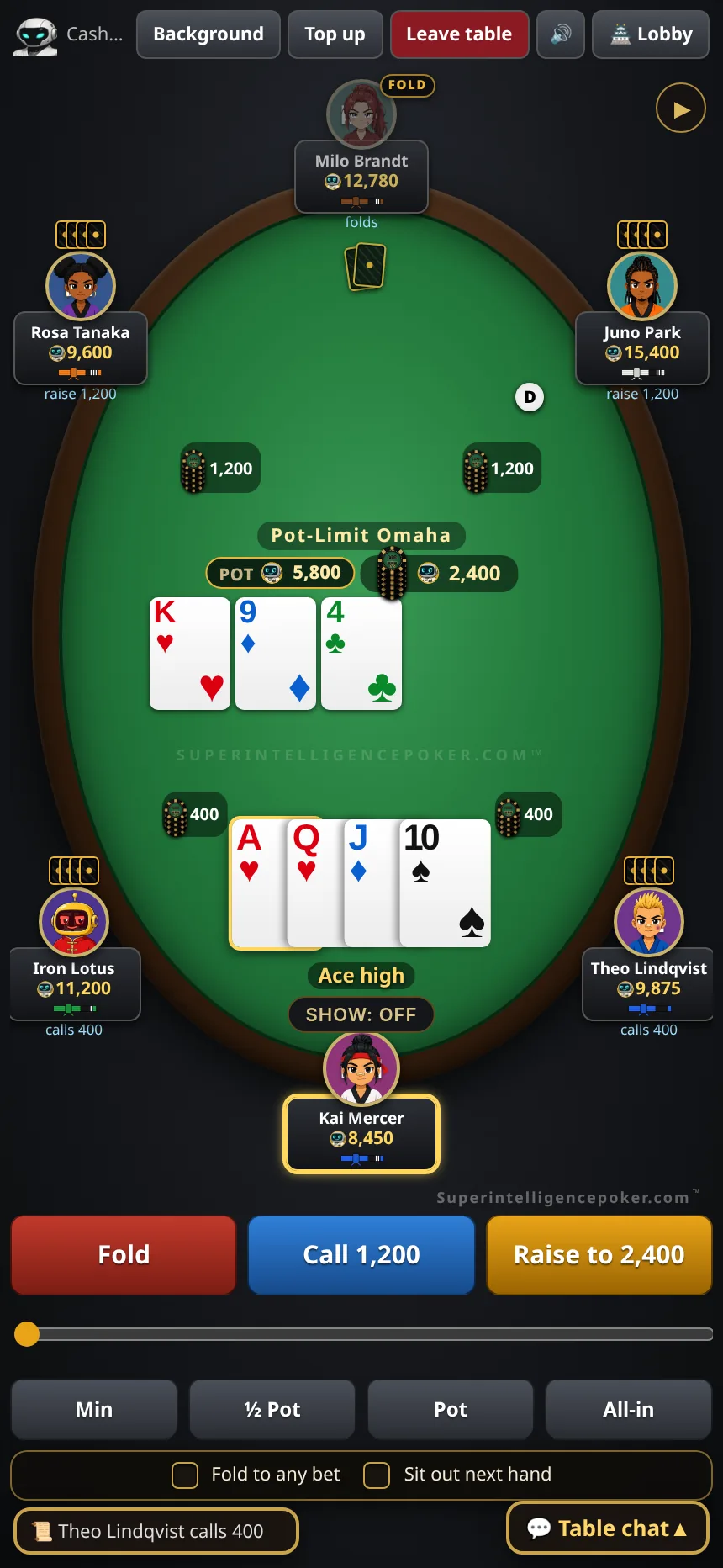
PLO strategy: 6-max table at Superintelligence Poker. Image: Superintelligence Poker.
Why PLO Is Different From Hold'em
Four hole cards give you six two-card combinations. That means more draws, more big hands, and closer equities. In Hold'em, A-A is about an 80% favorite over a smaller pocket pair before the flop. In PLO, even the best starting hand is often only around a 60-65% favorite over a good hand. Edges are smaller pre-flop and bigger post-flop, which is where skilled players win.
Starting Hands: Coordination Is King
Great PLO hands share three traits:
1. Connectedness. Cards close in rank (like J-T-9-8) make lots of straights.
2. Suitedness. Double-suited hands (two cards of one suit, two of another) are best. Single-suited is fine. Rainbow hands lose a lot of value.
3. High cards. High straights and flushes beat low ones.
Strong hands: A-A-K-K double-suited, A-A-J-T double-suited, K-Q-J-T double-suited, J-T-9-8 double-suited.
Hands to be careful with: "danglers" (three good cards plus one useless card, like K-Q-J-3), three or four of one suit (they kill your own flush outs), and low rundowns like 5-4-3-2, which often make the low end of a straight.
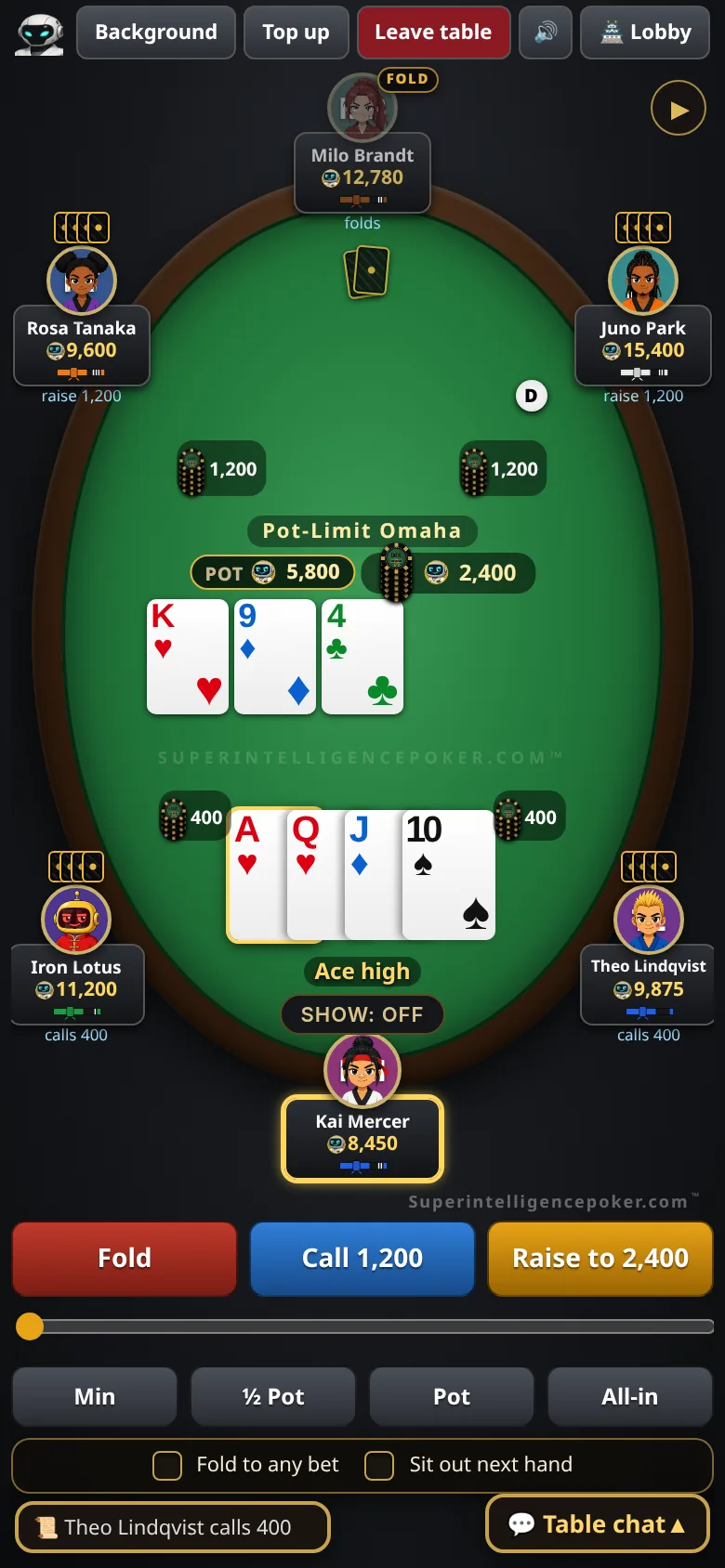
PLO on a 6-max table, phone view. Image: Superintelligence Poker.
Position in PLO
Position matters even more in PLO than in Hold'em because the pot limit makes the last player to act the one who controls the size of the pot. A rough 6-max guide:
- Lojack and Hijack: open about 15-25% of hands. Stick to well-connected, suited holdings.
- Cutoff: open about 25-30%.
- Button: open up to 40-50% of hands. Raise often to build pots in position.
- Blinds: defend selectively. Playing PLO out of position with weak hands is very expensive.
Pre-Flop Play
- Open by raising, usually to the pot or slightly less. Limping is weaker for the same reasons as in Hold'em.
- 3-bet hands with aces, especially suited ones, and strong rundowns in position. Holding an ace also blocks your opponent from having A-A.
- Don't overvalue A-A. A-A with two junk cards can be hard to play post-flop. Many pros 3-bet it to shrink the stack-to-pot ratio, then commit on good flops.
- Watch stack depth. Deep stacks favor speculative hands like rundowns. Short stacks favor high pairs.
Post-Flop Strategy
Draw to the nuts
This is the single most important PLO rule. If you make a flush that isn't the nut flush, or a straight with the low end, you'll often be paid off by someone with a better one. Before you bet big, ask, "What's the best possible hand here, and do I have it or draw to it?"
Count your outs carefully
PLO draws can be huge. A "wrap" straight draw, such as holding J-T-8-7 on a 9-6-2 flop, can have 17 or more outs, making it a favorite over a set. Wraps plus flush draws are monster hands even before they hit.
Bet sizes
With the pot limit, a pot-sized bet is the biggest you can make. Use it with strong hands and draws that want to protect equity. Smaller bets (about half the pot) work on dry boards where your opponent's range has missed.
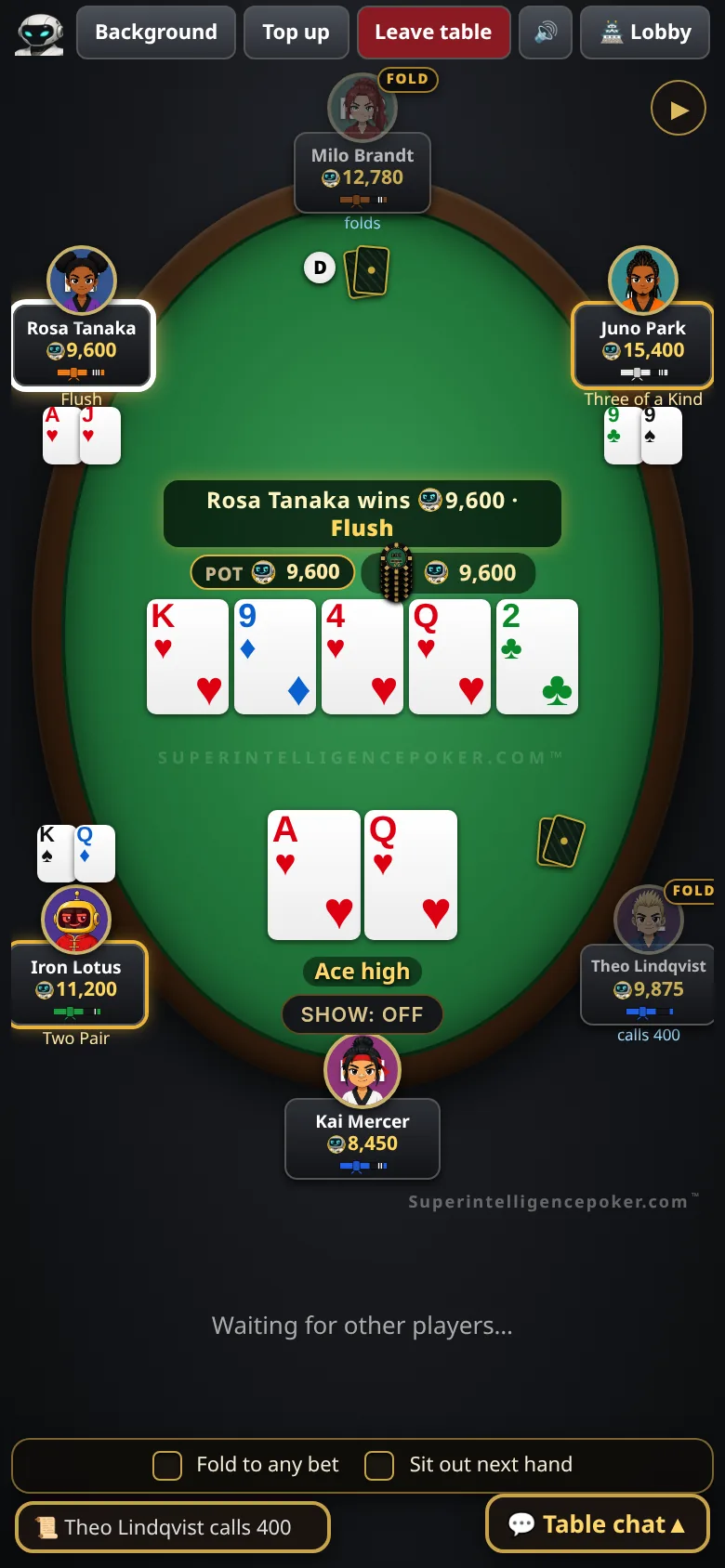
6-max PLO showdown at Superintelligence Poker. Image: Superintelligence Poker.
The sensei is waitingTrain against superintelligent bots. Free account, play money only. Dojo Coin is play money.JOIN NOW
Fold more on scary boards
When a fourth card of a suit or a four-straight hits and you don't hold the nuts, slow down. Big bets on these boards usually mean someone does.
Want to try wrap draws on real tables? play online poker for free in the dojo's PLO games.
Common PLO Mistakes
1. Playing Hold'em hands. Two great cards and two bad ones make a weak PLO hand.
2. Chasing non-nut draws. Second-best flushes are expensive.
3. Overplaying top pair or two pair. In PLO these hands are often way behind by the river.
4. Ignoring the "exactly two" rule. Four hearts on board with one heart in your hand is not a flush.
5. Playing out of position too much. The pot limit punishes it.
Bankroll and Variance
PLO swings are famously large. Because equities run close, you'll get all-in as a small favorite often, and lose a good share of those. Many coaches suggest 50 or more buy-ins for cash games, and more for tournaments. Track your results over a large sample and don't judge yourself by one session.
At Superintelligence Poker, every game uses Dojo Coin, play money with no cash value. You can't buy it and can't cash it out, so you can feel PLO's swings without any real-world risk.
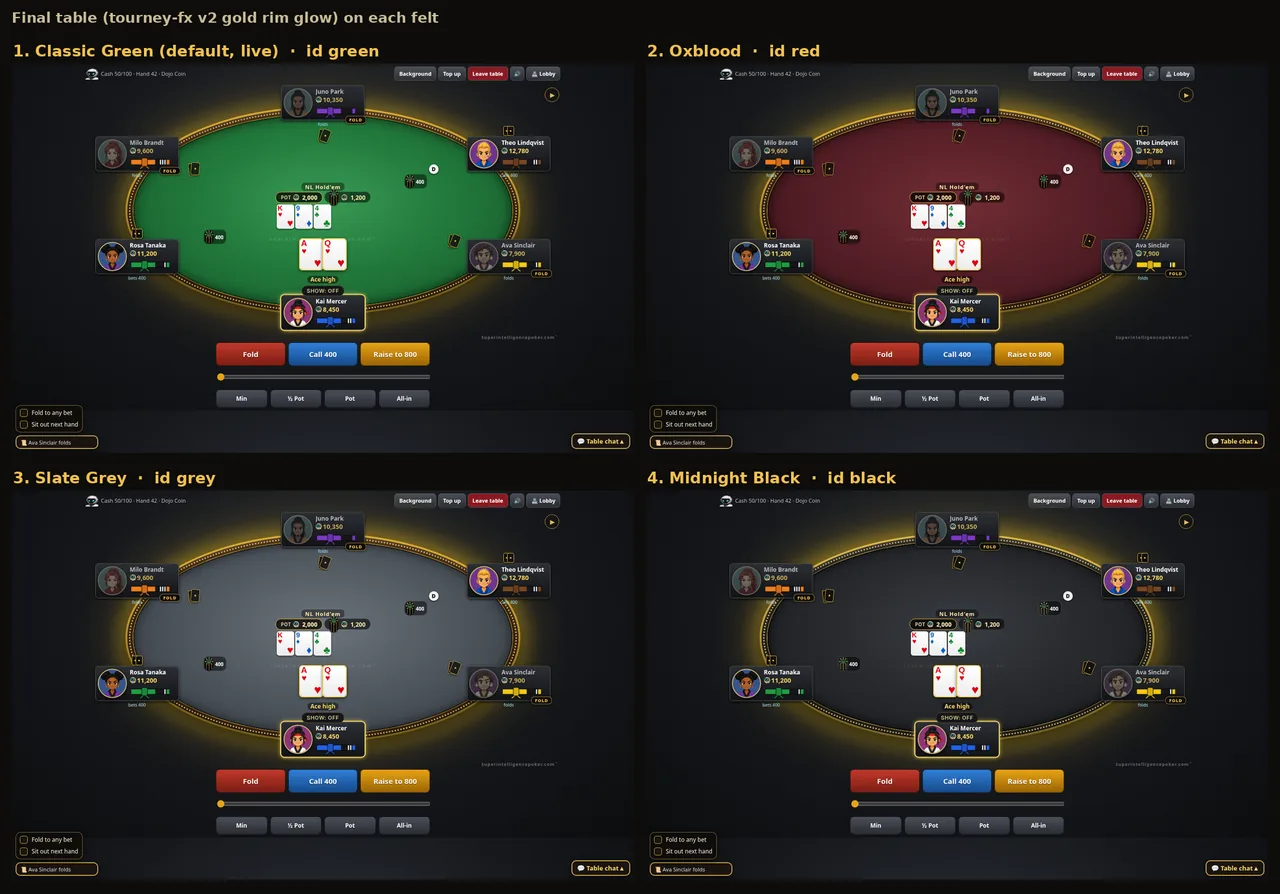
Superintelligence Poker felt colors. Image: Superintelligence Poker.
Practice Plan
1. Deal yourself random four-card hands and rate them: connected? suited? high?
2. Play a session where you only stack off with the nuts or a big nut draw.
3. Review all-in hands and check equity afterward.
When you're ready, play online poker for free against people, poker bots, or both.
FAQ
What is the best starting hand in PLO?
A-A-K-K double-suited is generally considered the best Pot-Limit Omaha starting hand.
How many cards do you use in PLO?
Exactly two of your four hole cards and exactly three board cards.
Why is PLO more volatile than Hold'em?
Hand equities run close together, so big pots are often near coin flips.
Is A-A always a raise in PLO?
Usually, but its value depends on the side cards. A-A with suits and connected side cards is far stronger than A-A with two low unconnected cards.
What is a wrap in PLO?
A straight draw using three or four of your hole cards that can complete with many different cards, often 13 to 20 outs.
Related Strategy Articles
Sources
- Jeff Hwang, Pot-Limit Omaha Poker: The Big Play Strategy (Kensington)
- Upswing Poker, PLO strategy articles: upswingpoker.com
- Run It Once Poker training: runitonce.com
- Wikipedia, "Omaha hold 'em": en.wikipedia.org
- Superintelligence Poker, Pot-Limit Omaha rules
Ready to take a seat?Join free and put what you just read to work at the tables. Dojo Coin is play money.JOIN NOW