6-Card PLO Strategy: Taming the Wildest Game in the Dojo
 Step into the DojoFree poker against bots that learn. Earn your belt. Dojo Coin is play money.JOIN NOW
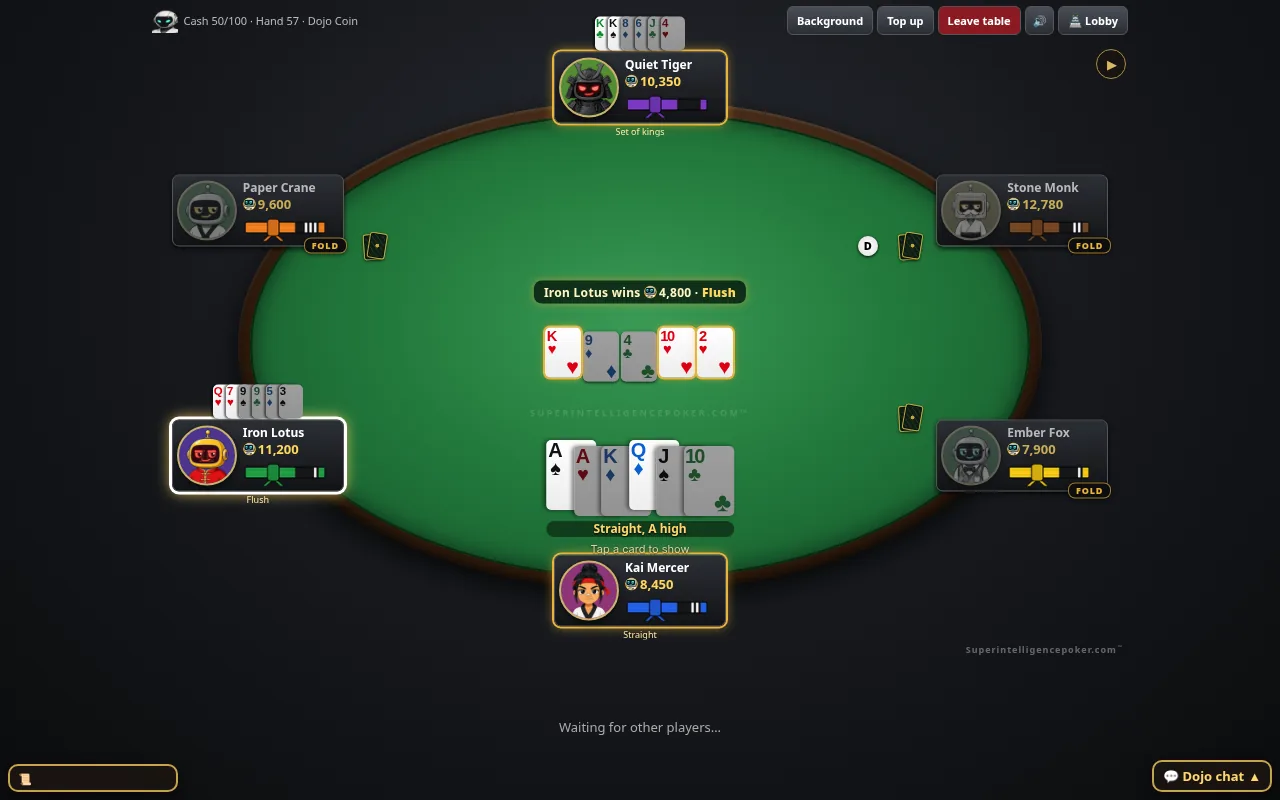
Quick answer: In 6-Card PLO you get six hole cards but still use exactly two, plus exactly three from the board. Six cards give you 15 two-card combinations, so strong hands show up constantly and the winning hand at showdown is much stronger than in 4-card PLO. Winning 6-Card PLO strategy means playing well-connected, suited hands, drawing almost only to the nuts, folding second-best hands without regret, and using position to control the pot.
First time here? Skim the 6-Card PLO rules, then grab your six cards and let's go.
6-Card PLO strategy: 6-max table at Superintelligence Poker. Image: Superintelligence Poker.
How 6-Card PLO Changes the Math
In 4-card PLO you hold 6 two-card combinations. In 6-Card PLO you hold 15. That one change rewrites the game:
- Hands get bigger. Straights, flushes and full houses come up far more often, so one pair and even two pair are usually weak by the river.
- Equities run even closer. Pre-flop, good hands are rarely big favorites over other good hands.
- Blockers matter more. Holding key cards (like the ace of a flush suit) tells you a lot about what your opponents can't have.
If you play 6-Card PLO like 4-card PLO, you'll pay off a lot of better hands. Adjust your "this is good" meter upward.
Starting Hands: What to Look For
With six cards, almost every hand looks playable. Most aren't. Look for:
1. Connected cards. Runs like Q-J-T-9-8-x give you straight draws on many flops.
2. Suits, with discipline. Double-suited (or triple-suited) hands are great, especially with the ace or king of a suit. Avoid four or more of one suit.
3. High cards. High straights and nut flushes win. Low rundowns make "idiot end" straights.
4. Pairs as a bonus, not the whole plan. A-A in a six-card hand is nice, but without connection or suits it's weaker than in 4-card PLO.
Good examples: A-K-Q-J-T-9 double-suited, K-Q-J-T-9-8 double-suited, A-A-K-Q-J-T suited to the aces.
Trouble examples: six scattered low cards, hands with three or more danglers, A-x-x-x-x-x where the ace is the only good card.
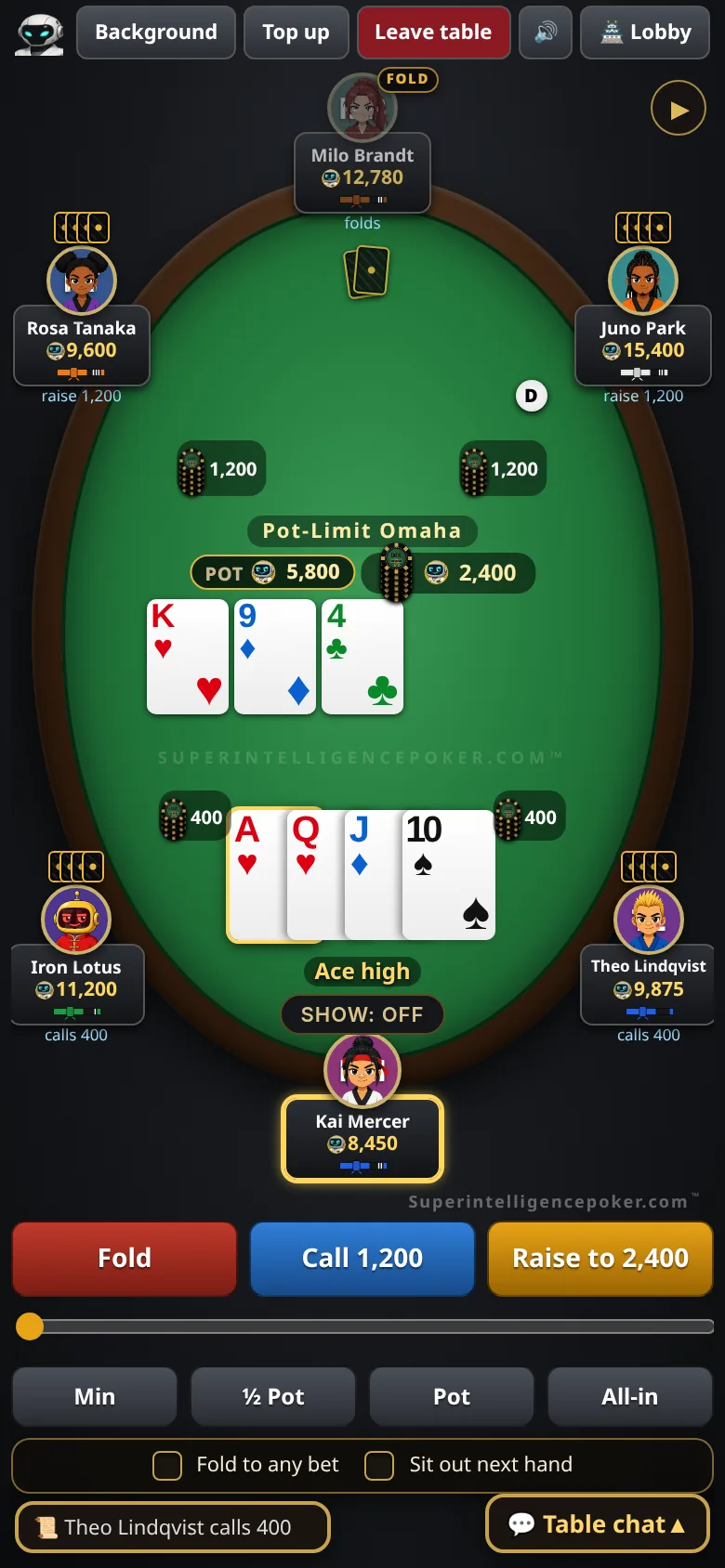
6-Card PLO on a 6-max table, phone view. Image: Superintelligence Poker.
Position: Even More Important
Every table at Superintelligence Poker is 6-max, and with everyone holding big hands, acting last is gold. You see how the action develops before deciding, and you control pot size under the pot limit.
- Early seats: play only your most connected, suited hands.
- Cutoff and button: open wider and raise to build pots in position.
- Blinds: defend less than you'd like. Six-card hands out of position bleed chips.
Pre-Flop Play
- Raise rather than limp. It narrows the field, and multi-way pots favor whoever holds the nuts, which is hard to predict.
- 3-bet hands with high, connected cards and nut-suit potential, especially in position.
- Keep pots smaller with marginal hands. Pre-flop edges are thin, so most of your profit comes after the flop.
- Expect multi-way pots. Plan for three or four opponents and play for the nuts.
Post-Flop Strategy
The nuts or near-nuts
The rule from 4-card PLO goes double here: draw to and stack off with the nuts. A king-high flush is often beaten. A middle set on a coordinated board is often in trouble. When you're not sure, ask, "Can anyone hold a better hand here?" With 15 combos per player, the answer is usually yes.
Use blockers
If you hold the ace of the flush suit, nobody can have the nut flush. That makes bluffs on flush-completing turns and rivers much more believable. Blockers to the nut straight work the same way.
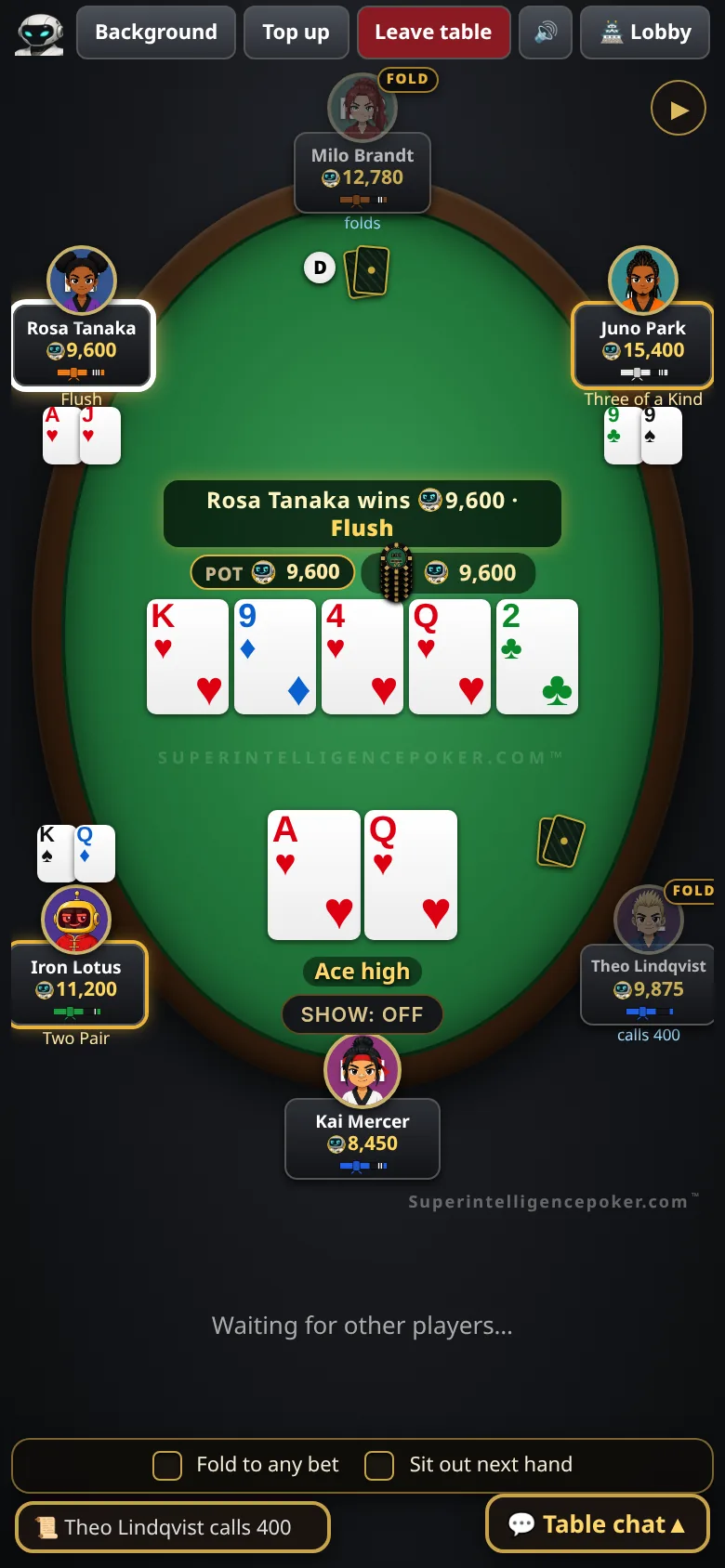
6-max 6-Card PLO showdown at Superintelligence Poker. Image: Superintelligence Poker.
The sensei is waitingTrain against superintelligent bots. Free account, play money only. Dojo Coin is play money.JOIN NOW
Monster draws
Wraps plus flush draws plus a set draw can make you a big favorite even before you've made anything. Play these aggressively, especially in position, and use pot-sized bets to build the pot when you're ahead in equity.
Know when to let go
Two pair, small sets and non-nut straights are bluff-catchers at best on wet boards. Fold them to big action from cautious players.
Want to feel how wild this game gets? play online poker for free at the dojo's 6-Card PLO tables.
Common 6-Card PLO Mistakes
1. Playing too many hands. Six cards make everything look good. Be picky.
2. Valuing hands like 4-card PLO. Average winning hands are stronger here.
3. Stacking off with non-nut flushes or straights.
4. Ignoring the "exactly two" rule. Your six cards still give you only two cards in your final hand.
5. Over-bluffing multi-way. Someone almost always has something.
Bankroll and Variance
6-Card PLO is one of the highest-variance games you can play. All-ins are often close to coin flips, and multi-way pots can wipe out a stack fast. A larger cushion than 4-card PLO is a good habit, and short sessions judged by results tell you very little.
Every game at Superintelligence Poker uses Dojo Coin, play money with no cash value that you can't buy or cash out. That makes it a great place to learn this wild game without any real-world risk.
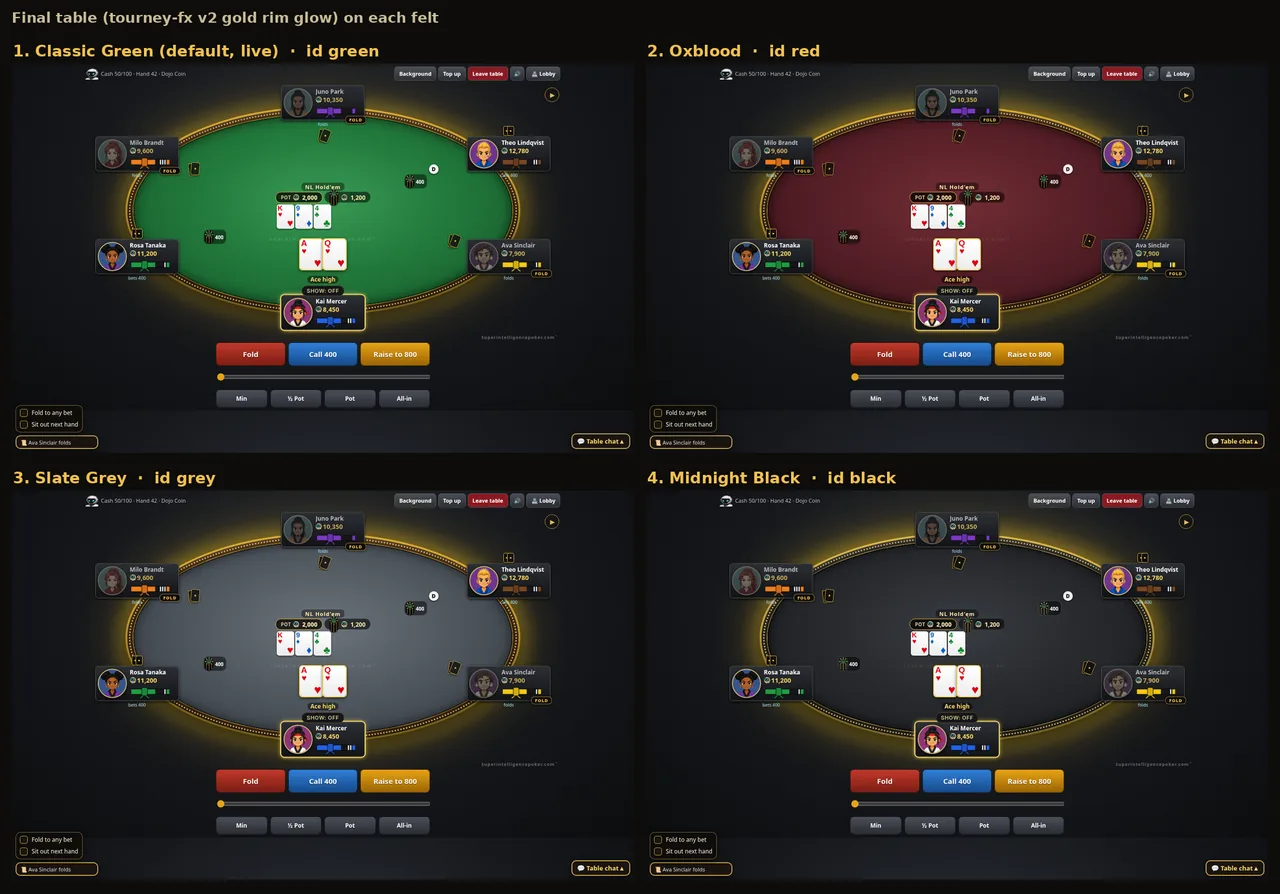
Superintelligence Poker felt colors. Image: Superintelligence Poker.
Practice Plan
1. Deal six-card hands and count the useful two-card combos in each.
2. Play a session where you only get all-in with the nuts or the nut draw plus extra outs.
3. Review big pots and look for missed blockers.
Then play online poker for free and see how you stack up against the bots.
FAQ
How many cards do you use in 6-Card PLO?
Exactly two of your six hole cards and exactly three of the five board cards.
Is 6-Card PLO pot-limit?
Yes. The biggest bet or raise is the size of the pot, just like 4-card PLO.
Why are hands bigger in 6-Card PLO?
Six hole cards give you 15 two-card combinations, so strong hands come up far more often.
What makes a good 6-Card PLO starting hand?
High, connected cards with good suits, especially nut-flush potential, and few useless cards.
Is 6-Card PLO harder than regular PLO?
It's swingier and hands run closer, but the core ideas, position and playing for the nuts, are the same.
Related Strategy Articles
- Pot-Limit Omaha (PLO) Strategy
- Texas Hold'em Strategy
- Omaha Hi-Lo (PLO8) Strategy
- Greek Hold'em Strategy
Sources
- PokerNews, "6-Card PLO" rules and strategy: pokernews.com
- Upswing Poker, Omaha strategy articles: upswingpoker.com
- Run It Once Poker training: runitonce.com
- Superintelligence Poker, 6-Card PLO rules
Ready to take a seat?Join free and put what you just read to work at the tables. Dojo Coin is play money.JOIN NOW